Introducing the PIVOT Model
A Business Leader’s Lens on Finance & IT Transformation
I’ve seen projects go live on time and on budget — and still struggle to deliver the value they were meant to create.
That pattern isn’t accidental. It’s structural — and it’s solvable.
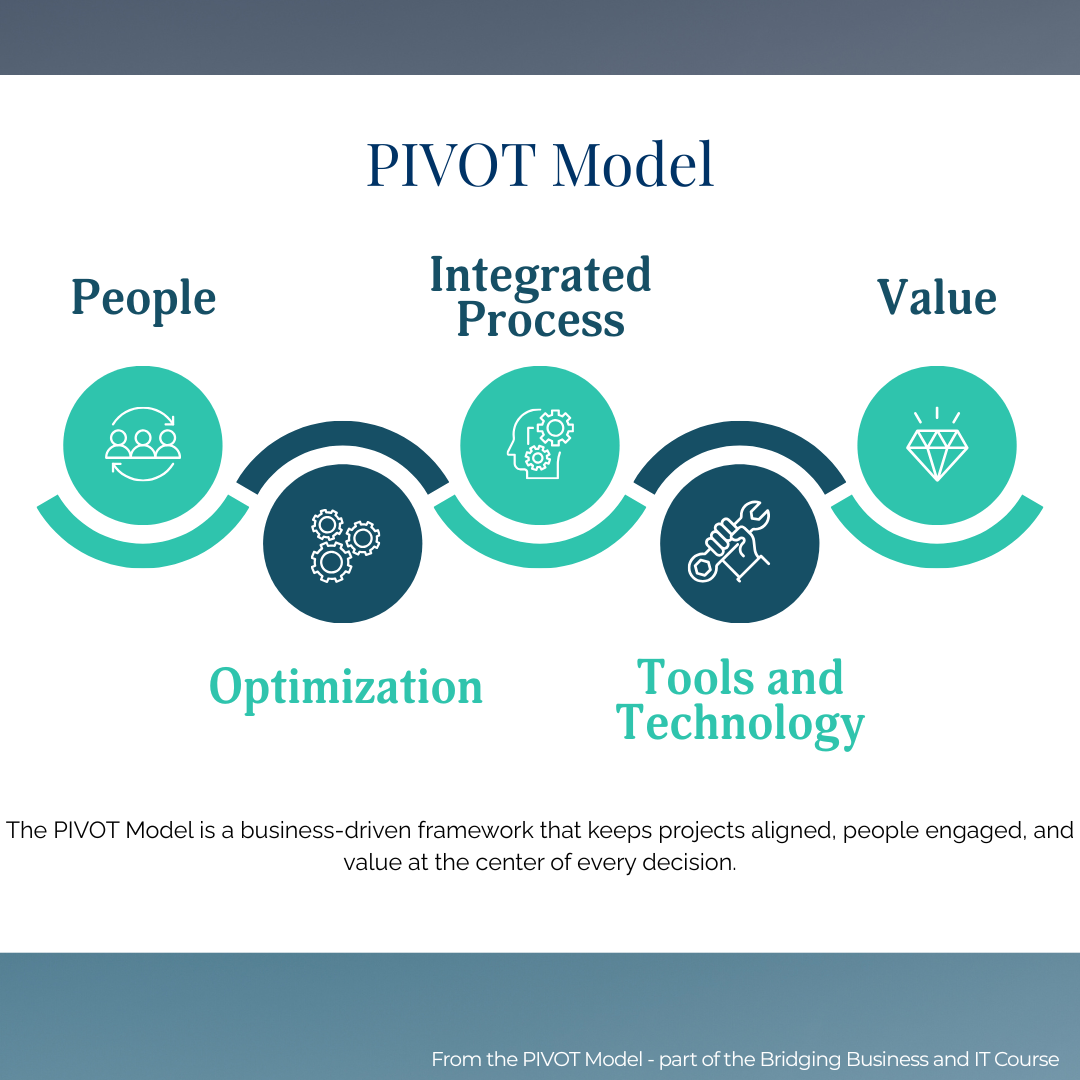
Introducing the PIVOT Model
Most transformation efforts don’t fail because of technology.
They struggle because value is assumed — rather than intentionally designed and driven.
Over nearly three decades leading finance teams and sponsoring large ERP and enterprise system transformations, I kept seeing the same pattern:
Strong project plans
Smart technology decisions
Capable teams
And yet… value realization was inconsistent.
Not because teams lacked effort.
Not because the systems were flawed.
But because value was not deliberately defined, reinforced, and owned throughout the lifecycle.
That realization led me to develop the PIVOT Model — a simple, practical leadership lens that helps business leaders purposefully drive value in complex transformations without becoming technical experts.
PIVOT stands for:
People. Integrated Processes. Value. Optimization. Tools & Technology.
It’s not a project methodology.
It’s a way of thinking — one that keeps value at the center of every decision.
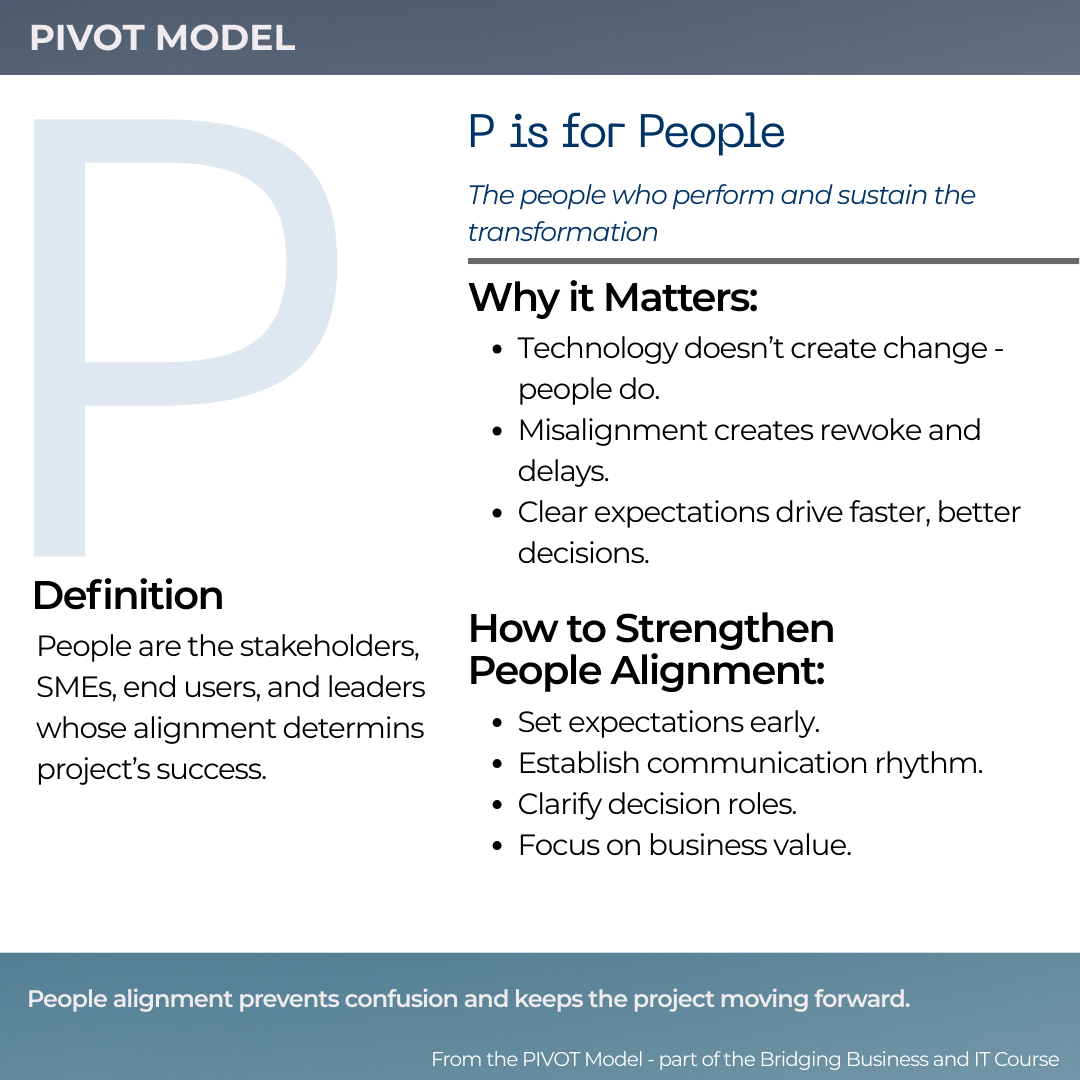
P - People
Transformation begins and ends with people.
Systems don’t create value.
People using systems differently do.
The “People” dimension asks:
Who must change behavior?
Do they understand the “why”?
Is ownership of outcomes clear?
Are we building capability — or just delivering training?
Adoption, utilization, and proficiency determine whether value materializes. Without intentional focus on people, even the best system becomes shelfware.
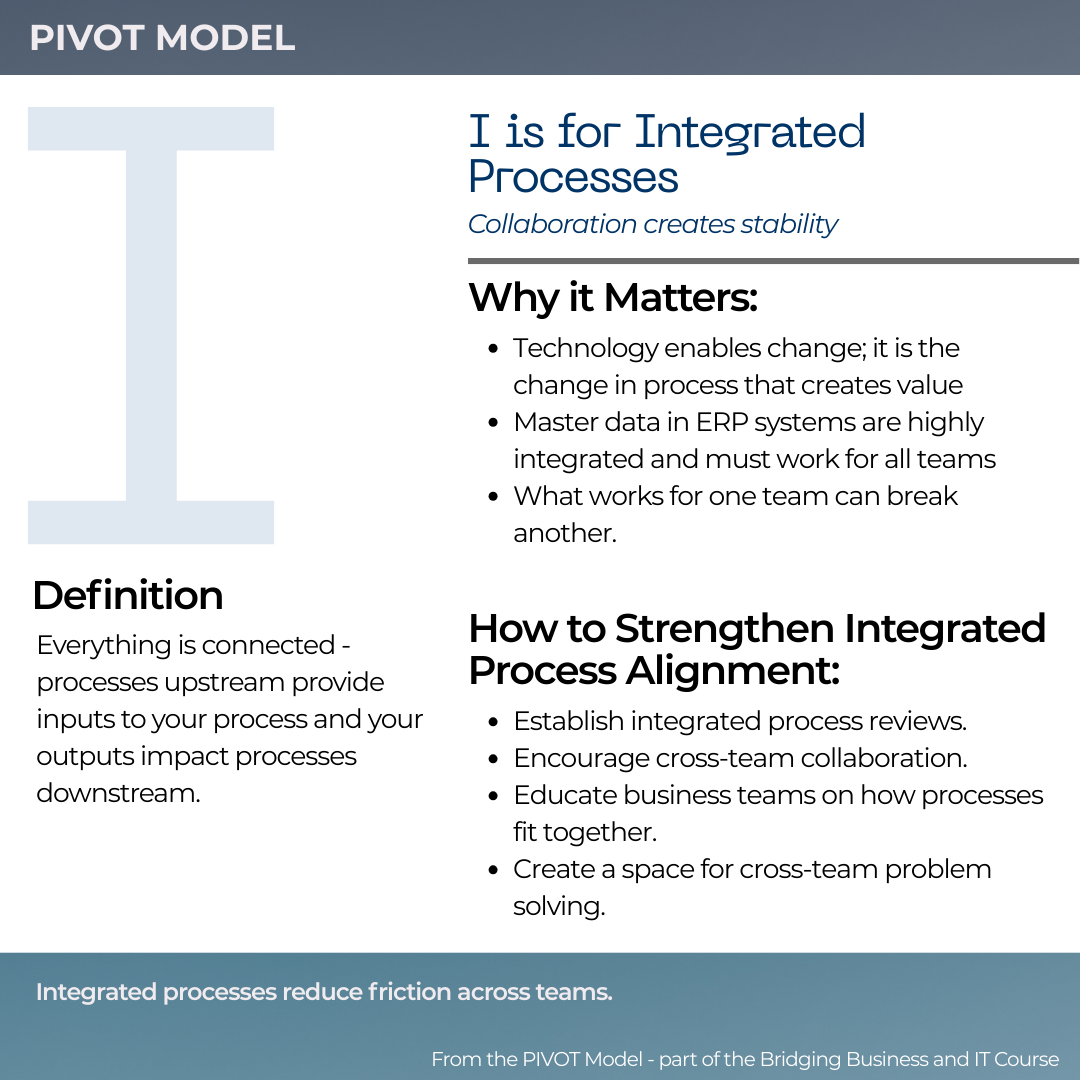
I - Integrated Processes
Integration is not just connecting systems.
It’s connecting functions.
Finance decisions affect operations.
Operational inputs affect reporting.
Technology enables workflows — but leadership aligns assumptions.
The “Integrated Processes” lens asks:
Where are our handoffs?
Where do assumptions differ across functions?
How do decisions in one area create friction in another?
True transformation reduces fragmentation. It creates shared understanding across Finance, IT, and Operations.
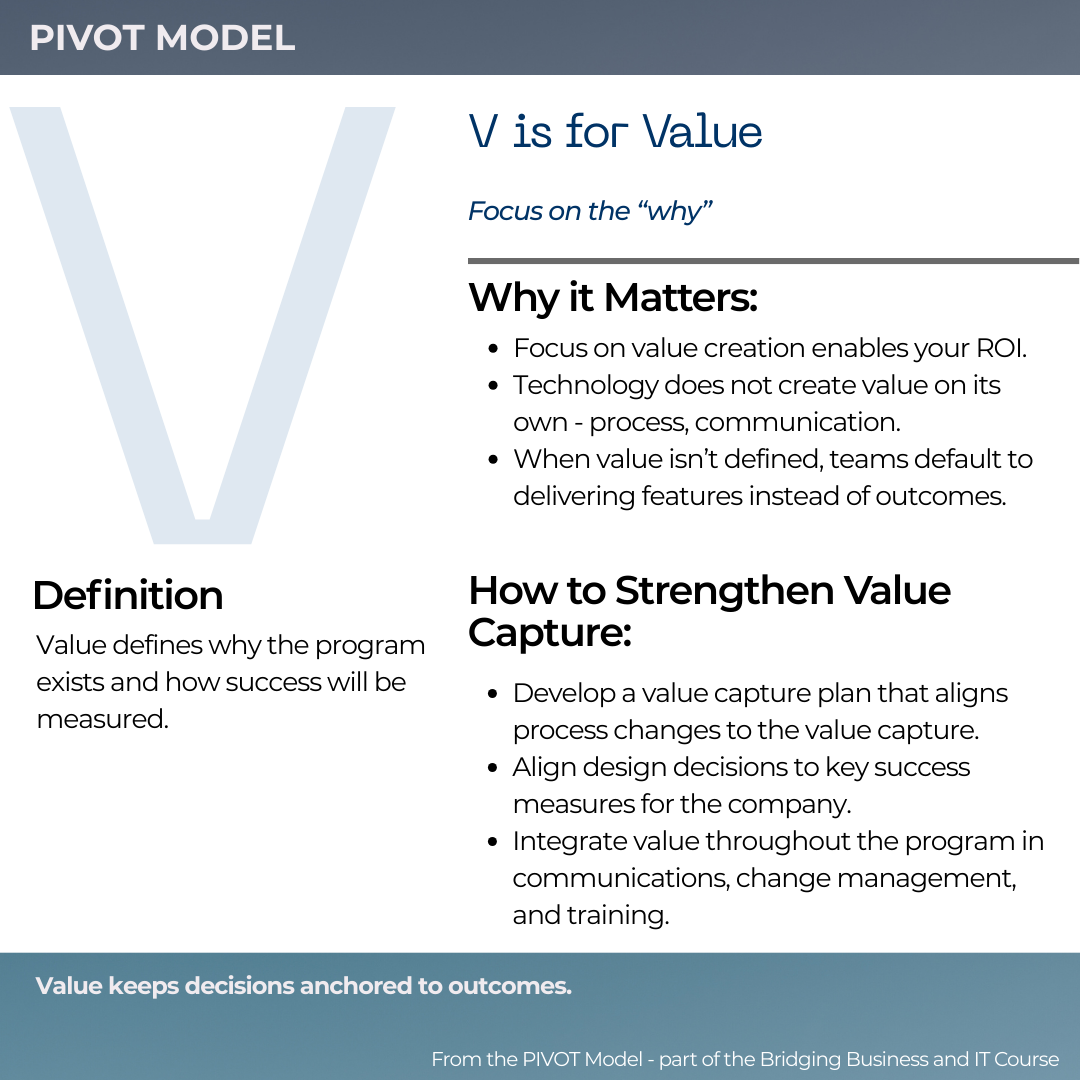
V - Value Capture
Go-live is not the finish line.
It’s the starting point for value realization.
Too often, success is defined by:
On time
On budget
Scope delivered
But business leaders must ask:
What behavior is changing?
What KPI should move?
Who owns the outcome after the project team disbands?
Value must be defined early — and protected throughout the lifecycle. it is, the way you tell your story online can make all the difference.
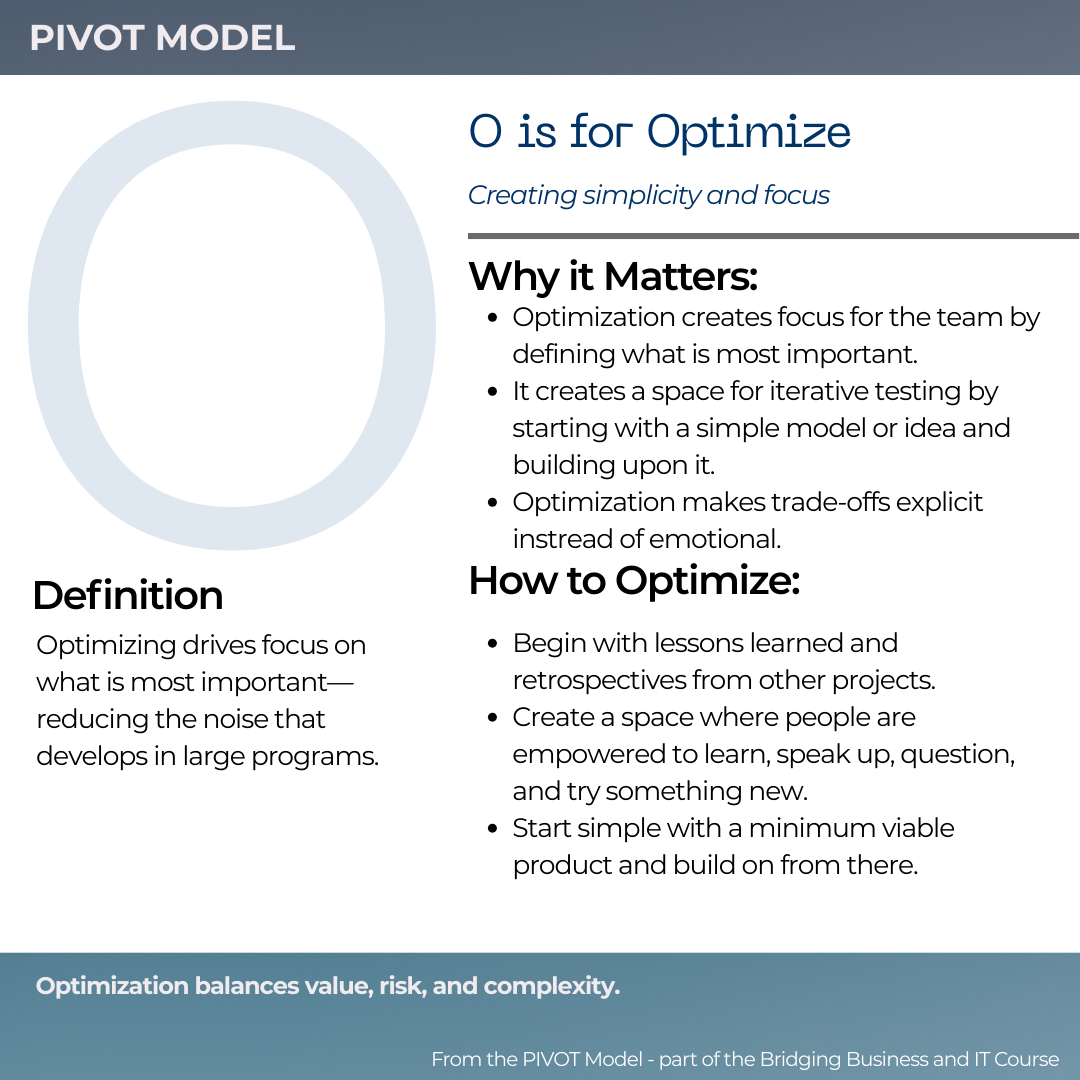
O - Optimization
Optimization is about thoughtful design before acceleration.
Speed without clarity creates rework.
This dimension challenges teams to ask:
Are we standardizing intentionally?
Are we designing for scalability?
Are we creating simplicity — or complexity?
Strong finance organizations create space for reflection before committing direction. They go slow where it matters so they can move faster later. it is, the way you tell your story online can make all the difference.
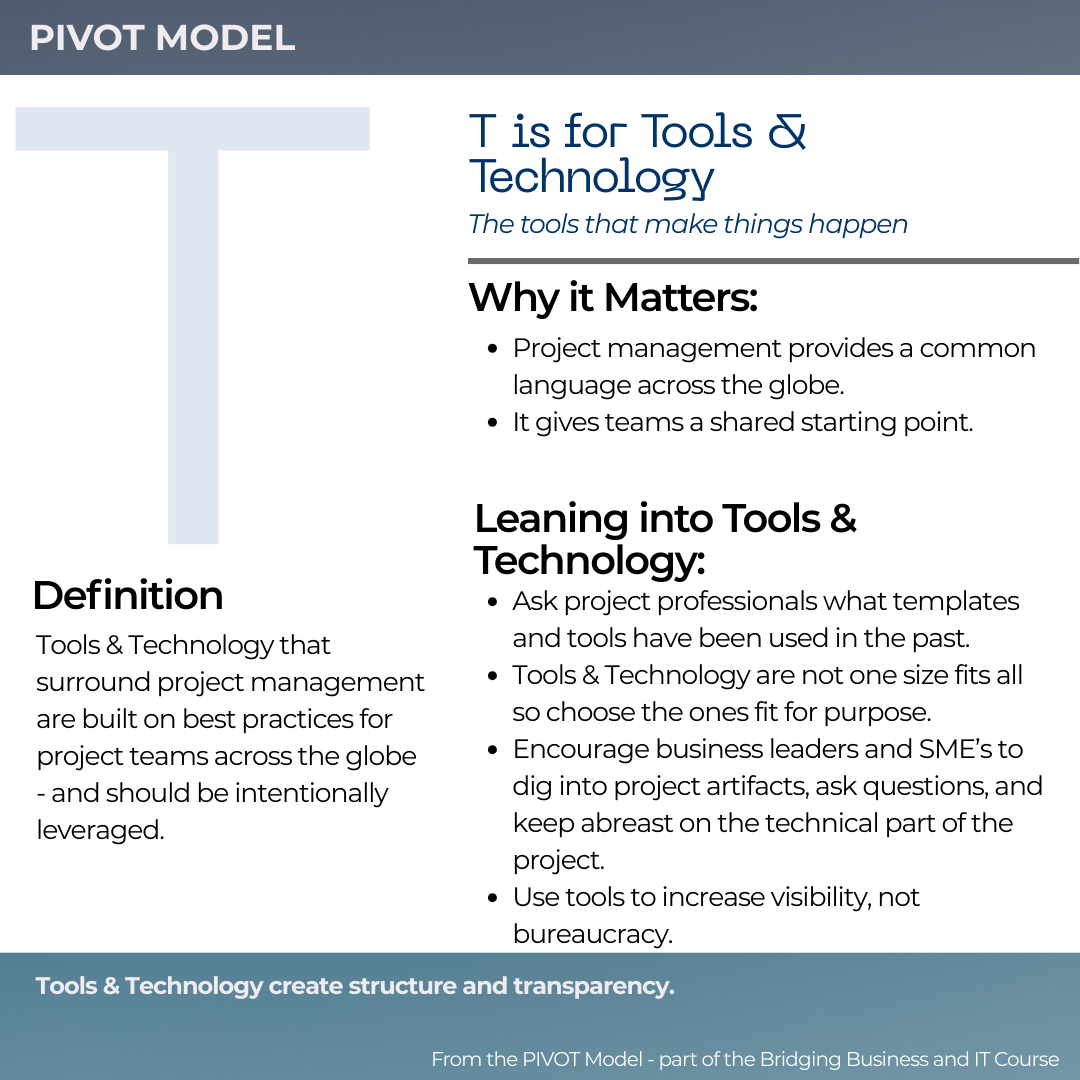
T - Tools & Technology
Technology matters. Deeply.
But it is an enabler — not the strategy.
Whether it’s SAP, Oracle, PSA platforms, or analytics tools, the question isn’t:
“What can the system do?”
It’s:
“What business capability are we trying to strengthen?”
Tools should support:
Clear processes
Defined ownership
Measurable outcomes
Sustainable performance
When technology is implemented without alignment to the other four dimensions, it creates complexity instead of capability. it is, the way you tell your story online can make all the difference.
Why PIVOT Matters
The PIVOT model helps business leaders:
Stay grounded in value during technical conversations
Ask better cross-functional questions
Protect adoption and accountability
Lead transformation with confidence
It bridges Finance, IT, and Operations — without requiring leaders to become system configurators. It provides a structured way to think, challenge, and align. Because successful transformation doesn’t just connect systems. It connects purpose.
If you’re navigating a finance or ERP transformation and want a structured, business-driven lens, PIVOT is the foundation of my Bridging Business & IT framework.
Value doesn’t happen by accident. It happens by design.
If you are:
Sponsoring a finance or ERP transformation
Leading a cross-functional system initiative
Navigating value realization challenges post-go-live
Or preparing your team for modernization
There are two ways to go deeper.
1️⃣ Consulting Engagements
As a Finance Transformation Consultant, I partner with executive leaders to bring structured clarity to complex initiatives — aligning business strategy, ERP execution, and sustainable value capture.
2️⃣ The Bridging Business & IT Course
My Bridging Business & IT program is designed for business and finance leaders who must guide technical transformations — without becoming technologists.
The course applies the PIVOT framework to:
Business case development
Stakeholder alignment
Cross-functional integration
Change adoption
Value ownership
Because projects end.
Value begins there.